Table Of Content
- Changing the quality of buildings.
- The Multi-Dimensional Magic Behind 3D Printed Houses
- Are the materials for 3D printing houses more sustainable? Maybe not!
- More people should be getting the M2 Mac mini instead of a MacBook
- Construction printing services
- What is the approximate cost per square foot for an ECOHOME?
- Revolutionizing Construction
- CyBe Construction

The interiors were designed by Austin-based Claire Zinnecker – “who chose a simplified color palette of green, white and terracotta as well as fixtures that play off the natural materials” says ICON. Comprising 3D-printed floors, walls and roofs of wood fibers and bio-resins, the home is fully recyclable and highly insulated with 100% wood insulation and customizable R-values. Its printing technique makes the concrete formwork superfluous, saving an estimated sixty percent of the material, time and money. Printed in one piece with Europe’s biggest 3D printer and the world’s first – this 90-square meter two-story home by Kamp C is sited on grounds in Westerlo. “With the printing insulated and self-supporting wall elements curved in three planes, we’ve taken important steps in this project in the further development of 3D concrete printing in construction” says Weber Benelux, CEO Bas Huysmans. Ehrlich Yanai Rhee Chaney Architects (EYRC) created this alluring two-bedroom and two-bath house, known as the Quatro, which the team says will produce as much energy as it consumes using Mighty Buildings’ flexible, panelized kit of parts.
Changing the quality of buildings.
However, since construction 3D printing is still in its early years, it is difficult to provide definitive statements about how long it takes to 3D print a house and how much it costs to 3D print a house. Their two 3D printers, Armadillo Black and Armadillo White, aren’t able to print a house but can 3D print stone decorations or molds. The WATG architectural design firm won the Branch Technology Freeform Home Design Challenge in 2016. In 2019, their project is set to be printed in Tennessee by Branch Technology’s C-FAB freeform construction 3D printing method. Some construction 3D printers look like super-sized desktop FFF/FDM 3D printers (gantry style), whereas others consist of a rotating mechanical arm. To provide a complete overview of the construction 3D printer market, we have listed 12 house 3D printing solutions.
The Multi-Dimensional Magic Behind 3D Printed Houses

3D printing technology is starting to gain a lot of attention as a promising solution for house construction. This innovative technology has many benefits, such as allowing for the creation of complex and customized designs with less material waste, and faster construction times than with traditional methods. As a result, the market for 3D printers designed specifically for house construction has grown rapidly in recent years. A company called mighty buildings is already selling and delivering its 3D-printing dwellings in California, with plans to expand into other territories in the future. To meet the growing demand for housing, Maine alone will need another 80,000 homes over the next six years, according to MaineHousing. WinSun claim to have sold more than 100 3D printed homes, using their FDM-style construction 3D printers that extrude cement and sand materials to build walls.
Are the materials for 3D printing houses more sustainable? Maybe not!
This is simply not plausible for traditional builds as they are more restricted by the shape of bricks, whereas 3D housebuilding can create curved shapes without issue. This offers potential for more compelling designs, as well as creating custom houses to suit disabled people. This administrative building comprises two floors, featuring beautiful 3D printed architecture born out of an ongoing collaboration between Russian 3D printed house company Apis Cor and the Dubai Municipality. The University of Maine just revealed the world’s largest 3D printer, and it is an absolute beast.
The goal was to build a prototype with the long-term goal of creating 3D printed houses that are cheaper and faster to build than traditional houses. The original printer, christened in 2019, was certified by Guinness World Records as the world’s largest polymer 3D printer, the university said. It was used to create a 600-square-foot, single-family home made of wood fiber and bio-resin materials that are recyclable. Dubbed “BioHome3D," it showed an ability to quickly produce homes. To meet the growing demand for housing, Maine alone will need another 80,000 homes over the next six years, according to MaineHousing.
Affordable starter home is 3D-printed in just 18 hours - New Atlas
Affordable starter home is 3D-printed in just 18 hours.
Posted: Fri, 26 Apr 2024 07:52:45 GMT [source]
Construction printing services
Nowadays, industrial-sized 3D printers have made it possible to print an entire house in less than 24 hours. The house in Nantes, France built for £170K is an accurate cost for a habitable 3D printed building, not the outlandish claims to build a fully-functioning domicile for $4,000. The most exciting part is the recycled concrete, developed by Italcementi, which uses debris from demolition sites to create the 3D printable material.
The house, like Apis Cor’s 3D printed concrete house in Russia, was built in 24 hours, and is part of ICON’s longer-term plan to assist in infrastructure in poorer parts of the world through housing. This 1022 square foot 3D printed house took 54 hours to build — though this was just the structure. An additional four months for fitting the windows, doors, and other parts was necessary before the home was finished.
Revolutionizing Construction
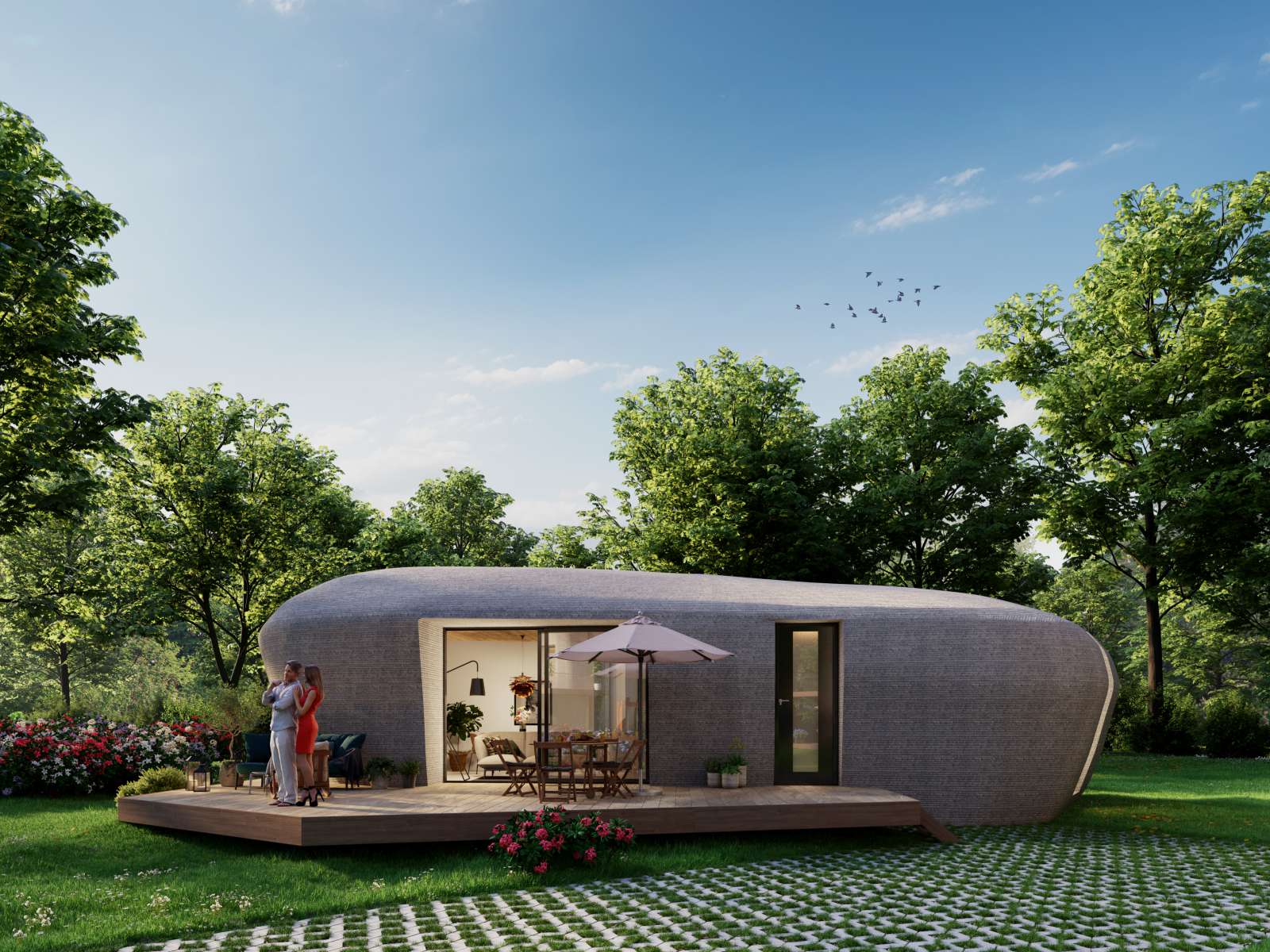
The entire building, including its roofs and foundations, is made of low-cost real concrete using a large construction 3D printer by COBOD. Nestled in a suburb of Eindhoven, this 94-square-meter boulder-shaped concrete single-storey house is built as part of a five-home 3D-printing scheme named Project Milestone and designed by Dutch architects Houben and Van Mierlo. A project that is as fascinating as it’s beautiful, construction technology company ICON and architecture studio Lake Flato present a 186-square-meter 3D-printed, modern home in Austin – House Zero.
These successfully 3D-printed houses certainly point the industry in the right direction and even though there’s still a lot of potentials to be explored in other markets – it’s clear that 3D construction printing is here to stay. It’s worth noting that ongoing research and experimentation continue to expand the range of materials that can be used in 3D-printed houses, opening up possibilities for sustainable and cost-effective construction. Utilizing ICON‘s Vulcan robotic construction systems, sophisticated software, and advanced materials, these homes are swiftly and efficiently delivered at scale. The construction process minimizes waste and provides unparalleled design freedom by 3D-printing the entire wall system, both interior and exterior walls. The interior and exterior design of a 3D printed tiny house looks very similar to a traditional home.
As a whole, the one-bedroom, one-bathroom building is 100-percent recyclable, made up entirely of biodegradable materials, including wood flour. As a prototype, BioHome3D is equipped with monitoring sensors, measuring thermal, environmental and structural elements, to gather resilience-based data to better inform future designs. The World Economic Forum has reported that 3D printing of houses provides a cost-effective and efficient alternative to traditional construction methods, with savings of up to 45%, by eliminating the need for expensive materials and labor. 3D-printed houses require less material and labor and are made with locally sourced materials. This is because 3D printers print the pass-throughs for plumbing and electrical, and print the window frame openings.
There are other tools and materials that are unique to building a 3D printed tiny house. While 3D printed houses are certainly the face of the future, the process is still up and coming. There are many advantages to using a 3D printer to build a tiny house, but also many disadvantages. In 2023, industrial-sized 3D printers are able to print an entire home in less than 24 hours for a tiny house at 225 square feet or less. Additionally, this estimate does exclude any pauses taken for second round error corrections, setup time needed for the framework and scaffolding, or any additional installations completed after the home is printed.
Printing, in general, refers to the process of creating text, images, or patterns on a surface, usually paper, by applying ink or other materials. This can be done using various methods, such as inkjet, laser, or screen printing. Our dedication lies in revitalizing smaller communities, offering them sustainable and affordable living spaces. By harnessing the power of innovation, we are transforming economically distressed and under-served communities, providing them with the infrastructure they need to flourish. Although WASP’s primary operations are based in Italy, the company has spread its mission to other construction projects around the world. Recently, WASP built the Gaia eco-sustainable house, proving the concept and showing a sleek yet basic small house can be 3D printed with ease.
And Tecla is made from clay, which, although natural, it’s not bio-based (meaning that it comes from something that was once alive). The strength of the new printed materials will be tested to determine the longevity of the reused materials. “The process is repeated five times to evaluate five recycling opportunities that may cover 500 to 1000 years of reuse,” Dagher says. Other sustainability questions—such as whether painted interior walls would still be recyclable—will be answered during subsequent tests, he said. The team has not published any studies or articles on the project yet, but it’s in the process of doing so. To truly imagine a future where 3D printing becomes the norm for mass housing – there are still many challenges to overcome in order to replace traditional methods.
ICON’s Vulcan II printer 3D printed each of these homes with support from Texas nonprofit, Mobile Loaves & Fishes (MLF). In the spring of 2020, a group of individuals moved into the homes, making them the first people to live in a 3D printed house in the U.S. In late 2020, Icon received funding from NASA to develop 3D printing technology for different projects on the moon. Dubbed “Project Olympus“, this partnership between NASA and ICON aims to construct living spaces, roads, and launch pads on the moon. In what is set to become the “largest-scale development of 3D-printed homes globally,” Danish architecture studio BIG and American 3D-printing firm ICON have successfully completed a full-sized model home.
Also, construction 3D printers can finish a home’s foundations in less than a few days, while traditional construction methods take several weeks or even months. Concrete 3D printing in the construction industry helps save time, effort, and material compared to traditional construction methods. It’s important to note, though, that 3D printers are not yet capable of creating a fully functional house.
The hyperspeed fabrication is the work of a megasize 3D printer—picture a MakerBot on steroids—named the Vulcan. Engineers run digital blueprints for the home through so-called slicer software, which translates the design into the programming language G-code. That code determines where the printer moves along its track, extruding 3⁄4-inch-thick layers of concrete like icing on a cake. The base material—a finely calibrated mix of cement, sand, plasticizers, and other aggregates—gets poured into a hopper at the top of the printer and flows onto the rising walls below. While the idea of 3D printing housing may have seemed far-fetched not that long ago, they are quickly becoming easier to build in our increasingly tech-dependent world.




No comments:
Post a Comment